你给八重神子宫司大人刷了三个月的圣遗物。不出意外的,你的圣遗物一如既往的烂,副词条不是小生命就是防御力。
你想起了行秋的极品暴击头,神里的极品攻击沙,胡桃的极品大攻击羽毛。刷圣遗物带给了你很多的悲伤,但是你仍然想要找一套圣遗物,使得在这套圣遗物下八重神子宫司大人的期望输出能够最大化。
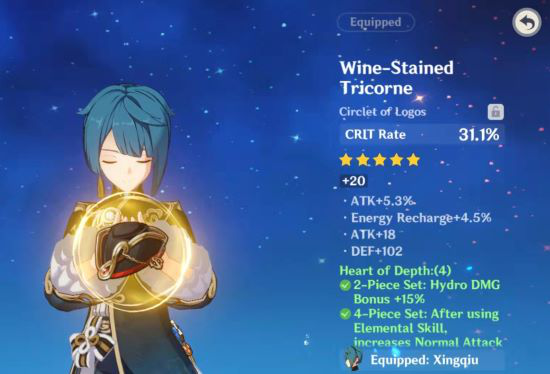
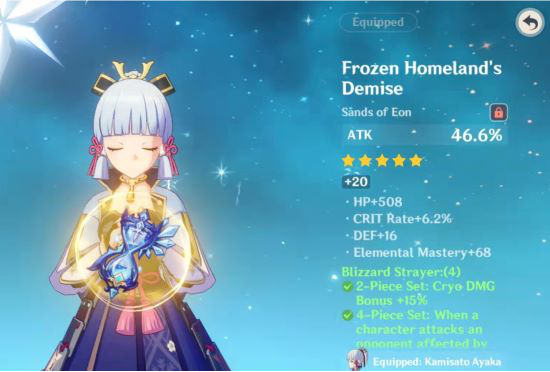
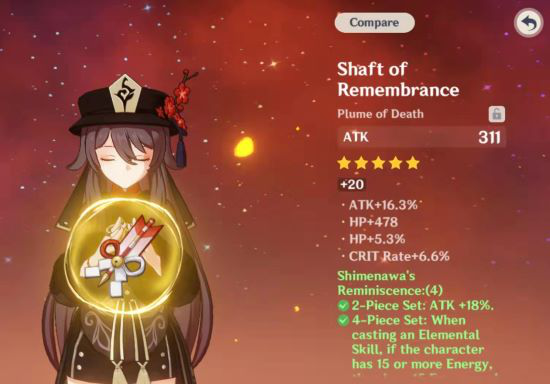
Fig 1. 一些寄品圣遗物.
在游戏设定中,每位角色最多可以佩戴 $L$ 个位置的圣遗物,每个位置只能佩戴至多一个圣遗物。角色有基础暴击率 $A$ 和基础暴击伤害 $B$。假设佩戴的所有圣遗物提供暴击率之和为 $a$,暴击伤害之和为 $b$,则你的输出仅仅和 $(A+a)(B+b)$ 相关(这里我们简化了设定,实际游戏当中期望伤害和攻击力,元素精通,敌人防御力等许多元素相关)。该值越高,你的输出越高。
你在第 $i$ 个位置刷了 $n_i$ 个圣遗物,第 $i$ 个位置的第 $j$ 个圣遗物的暴击率为 $a_{i,j}$,暴击伤害为 $b_{i,j}$。你想要知道,在角色基础暴击率为 $A$,基础暴击伤害为 $B$ 的前提条件下,通过配置圣遗物能够达到的最大的 $(A+a)(B+b)$ 的值。由于你有着众多的角色,你需要回答多组询问。
在单次大招上伤害百万的前提下你并不关心几百的伤害差距,因此你不需要给出最优解的精确的数字。你只需要返回一个足够接近最优解的方案即可。
Input
本题有多组测试数据。
第一行两个数字 $tid,T$,分别表示测试包编号和表示测试数据组数。对于样例则有 $tid = 0$。
对于每组测试数据:
第一行一个数字 $L$,表示圣遗物位置的个数。
接下来 $L$ 行,每两行形容在某一个位置上你刷出来的所有圣遗物。
对于每个位置,第一行一个正整数 $n_i$。
接下来一行 $2 \times n_i$ 个浮点数,第 $2 \times j-1$ 和 $2 \times j$ 个数字分别表示 $a_{i,j},b_{i,j}$ 的值。
接下来一个数字 $Q$。
接下来 $Q$ 行,一行两个浮点数 $A,B$,表示一次询问。
输入保证浮点数在小数点后最多保留两位数字。
Ouptput
对于每次询问,一行 $L$ 个数字,第 $i$ 个数字 $a_i$ 表示在第 $i$ 个位置上你选择的圣遗物恰好是输入的第 $i$ 组的第 $a_i$ 个圣遗物,这里我们认为圣遗物编号从 1 开始。
你的答案被认为是正确的当且仅当:
- 假定你给出的方案中 $(A+a)(B+b)$ 的值为 $x$, 参考解给出的值为 $y$, 最优解给出的值为 $z$。
- 你的答案被认为是正确的当且仅当 $|x-y| \le 2500$。
- 我们保证 $|y-z| \le 2500$,因此我们保证 $z - x \le 2500$ 时候,你的答案一定被判断为正确。
Examples
Input 1
0 1
2
2
1 2 3 4
2
1 4 3 2
2
1 1
5 1
Output 1
2 2
2 1
Notes 1
在第一个类的圣遗物之中,由于第一个圣遗物双爆属性都没有第二个好,因此最优方案中必定会选择第二个圣遗物。在第二个圣遗物选择第一个的时候,暴击加成为 4,爆伤加成为 8; 在第二个圣遗物选择第二个的时候,暴击加成为 6,爆伤加成为 6
在第一个询问的时候,两种方案得到的乘积分别是 $(4+1) \times (8+1) = 45$ 和 $(6+1) \times (6+1) = 49$,因此我们选择第二种。
在第二个询问的时候,两种方案得到的乘积分别是 $(4+5) \times (8+1) = 81$ 和 $(6+5) \times (6+1) = 77$,因此我们选择第一种。
Input 2
0 1
4
2
1 2 3 4
2
1 4 3 2
2
1 10 5 1
2
1 5 10 1
5
1 1
5 1
10 1
10 2
100 3
Output 2
2 2 1 2
2 1 1 2
2 1 1 2
2 1 1 2
2 1 1 1
Scoring
Subtask $1$ ($15\%$): $L \le 5, n \le 3$。保证 $a_{i,j},b_{i,j}$ 为整数,且在范围内均匀随机生成。
Subtask $2$ ($20\%$): $L \le 30$。保证 $a_{i,j},b_{i,j}$ 为整数,且在范围内均匀随机生成。
Subtask $3$ ($15\%$): $L \le 500$。保证 $a_{i,j},b_{i,j}$ 为整数,且在范围内均匀随机生成。
Subtask $4$ ($15\%$): 保证 $a_{i,j} + b_{i,j} = 100$。
Subtask $5$ ($35\%$): 无特殊限制。
对于所有测试数据,满足 $1 \le T \le 100, 1 \le \sum L \le 50000, 1 \le n,Q \le 10,0 < a_{i,j},b_{i,j} \le 100,1 \le A,B \le 10^7$。数据保证浮点数 $a_i,b_i$ 保留至最多小数点后两位。
\end{problem}